Saturday, August 2, 2014

Around Dhangadi


Around Dhangadi, we went to a school to see what was needed. The community didn’t seem too motivated to get things done, so CDRA is a little hesitant to get involved. They like to help communities, but they want the people to be active in their projects and invest either physically or financially so that the people are not just receiving handouts.

We stayed 2 nights in Dhangadi. One night, Sommaya’s husband Ramesh called me. Good lord that was hard. I can barely understand people speaking English over the phone, so Nepali was quite an adventure. I think our conversation was going in circles.

One day we had some free time, so we went to the longest bridge in Nepal. It’s about 1.5 kilometers long – nearly a mile. We took a lot of bridge pictures. All the rivers in Nepal are pretty low. That’s bad because this is monsoon season where the rains are heavy and the rivers should be high. I could’ve walked halfway to the other side with out using the bridge because the water was so low. This bridge was near the Indian border – maybe 3km away.
Hotel


Dead, large, lizard


Used to be an airport, now it's a grazing field

Friday, August 1, 2014

Kailali

On the way to Dhangadi, we stopped at Kailali. This village was allocated land by the government. They had to leave their old homes because the river flooded. This land used to be barren. Then NGOs such as CDRA came and installed many water bores. They were able to irrigate the land and now most of the land is used for farming. CDRA also purchased many vegetable seeds and taught the farmers how to plant them. Now the families have rice and veggies to eat.

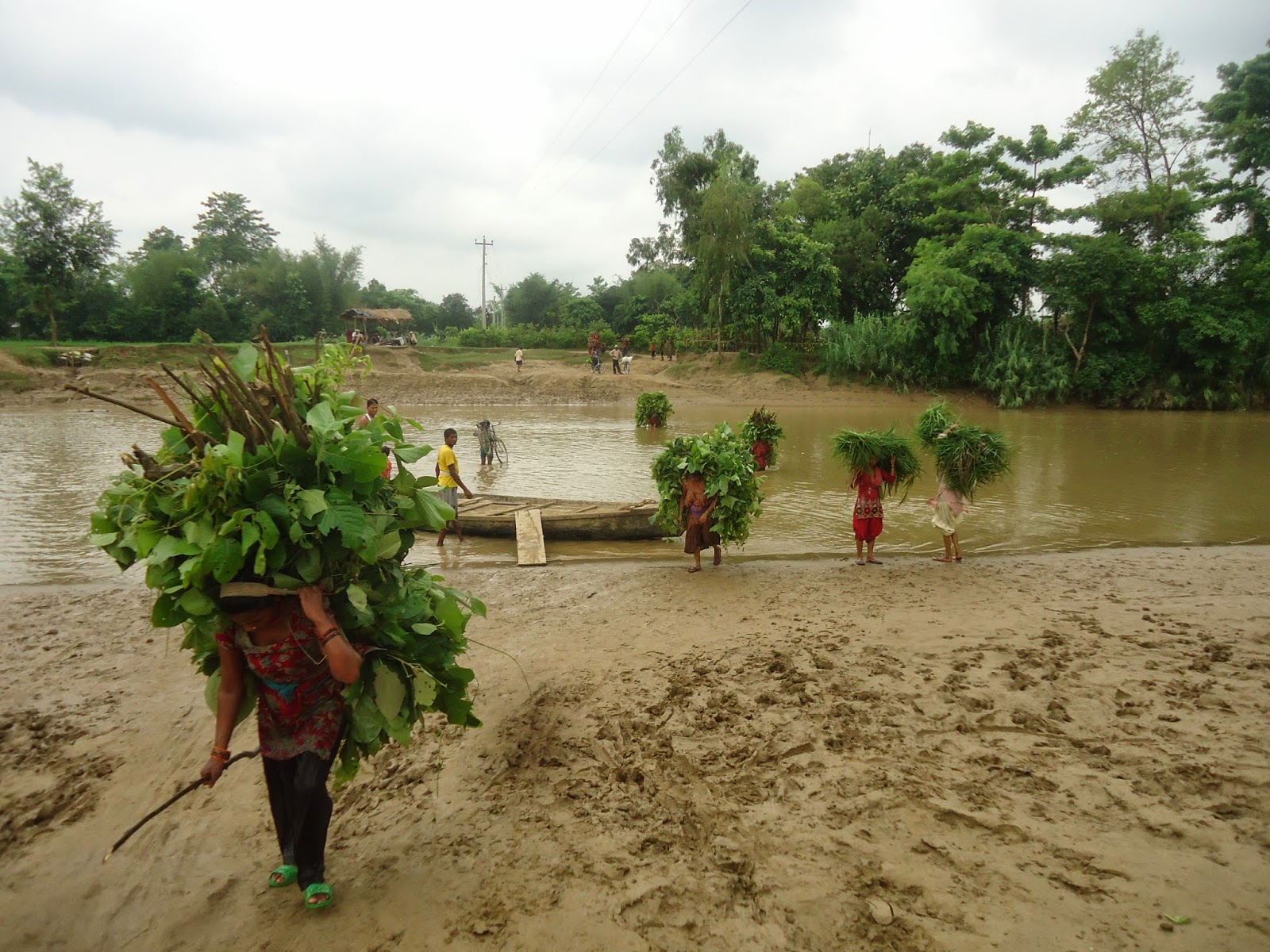
The village we went to was pretty far off the main road. We were on a dirt road for a while that was really muddy and full of potholes. We had to leave the car behind at one point because it couldn’t cross a river. After crossing the river via a small boat, we walked for about 20 more minutes to find a school. The school was funded by CDRA. We were there to check up on it and deliver a plaque. The old school was nearby. It had tiny tiny windows, no electricity, and was made of mud and hay. Inside, it was like an oven. It would be hard to learn in a hot, dark classroom. The newer school is made of brick and cement. There is electricity and larger windows so learning is more comfortable. The classrooms are also larger to fit the 175 kids that attend school there.

Crossing the river in style


Baby bananas

Guava plant

Inside the new school

Donors

New School

Old school. Tiny windows, small space, no electricity.
I really liked this village. Even though it was ridiculously hot, it was very peaceful. The houses were spread out and there were many paths that motorcycles or bikes could navigate. The people living there were Taru. Our contact was cha-cha Chaudary. “Cha-cha” means uncle in Taru. We went to his house and had some snacks.

Footpaths/Bike trains around the village. Very flat and peaceful

Rice, stored in huge mud tubs.
The boy is leaning against a large mud tub that they store with rice. It keeps the rice fresh and the bugs out.


Rubita, Anup, Rupak sitting on the Taru version of a couch.

Ashok with veggies he donated

Ashok with more veggies
After snacks, they showed us a water bore that had been donated. It took many tries to get the motor started. They had to pour some water down the pipe in order to get it to start spewing water. Water likes to stick to itself, so pouring water down the pipe sort of kick-started the process. The ground water had something to stick to and could more easily climb out. I’m kind of just making that up, but it makes sense to me. Once the pump got going there were some coughs of smoke and then a huge gush of water. They just let it flow into some channels that went out to irrigate the crops. People started drinking the water and a couple kids took a quick shower.

Trying to get the water pump to start


Taking a quick shower

Walking in the rice fields with Rubita, Anup, and Rupak.

Wednesday, July 30, 2014

Off to Chisapani


Before going to Chisapani, we went to a rotary meeting in Dang and one in Tulsipur. The rotary club of Dang is very new and they need a lot of support and motivation from Ashok. He gave them ideas and tips on how to run their club. We dropped off a few bags at this club to be donated to some school children. The bags were prepared before we left Banepa. In each of them are a few pencils, notebooks, soap, a tooth brush & toothpaste, Q-tips, powder, nailclippers, lotion, a comb, and band aids. We passed out a lot of these bags.


The rotary club in Tulsipur seemed more put together. When we arrived there was a crowd of kids there. They were kids who were rescued from child labor. After the meeting finished, we gave out bags to each of the kids. We also donated a walker.
Handing over the walker

Giving bags one by one to the kids

All the kids and rotary

The road to Chisapani was very flat. In the Tarai, people and animals use the road. In some parts, the roads are really crowded with 10 parts animal, 1 part human. People in the Tarai also bike a lot. Bikes are cheap and it’s not very hilly so it’s the preferred mode of transportation. Women seemed to ride bikes as much as men. There are also many rickshaws (photo here) in the Tarai cities. The Tarai region is very poor, so people can’t afford taxis. In Kathmandu, I usually only saw rickshaws in the touristy part of town. In the Tarai, they’re everywhere. There are also many bulls in this region because they’re used to pull carts. There aren’t many sows because they’re not as strong. Back on the road, there was an elephant spotting. I’m pretty sure it was wild because we were near a forest and there was no one controlling it.

Elephant spotting!
All four of us matching: Rubita, me, Anup, Rupak. Squished in the backseat for the entire road trip like this.

We also stopped to visit a friend of Ashok’s. When we meet new people he says, “and this, this is my local connection.” Ashok has local connections everywhere. This man’s oldest daughter died last year from a snakebite. We gave his kids pens and notebooks.

Ashok's friend and family
At Chisapani we stayed at a nice hotel. It was right on a huge river. We grilled some fish and goat meat. After we had a beer and ate all the meat, we went upstairs and… Surprise!! Time for dinner! I was confused. Apparently the meat was just an appetizer, we still had to eat a full course of dal bhat. I was so full.

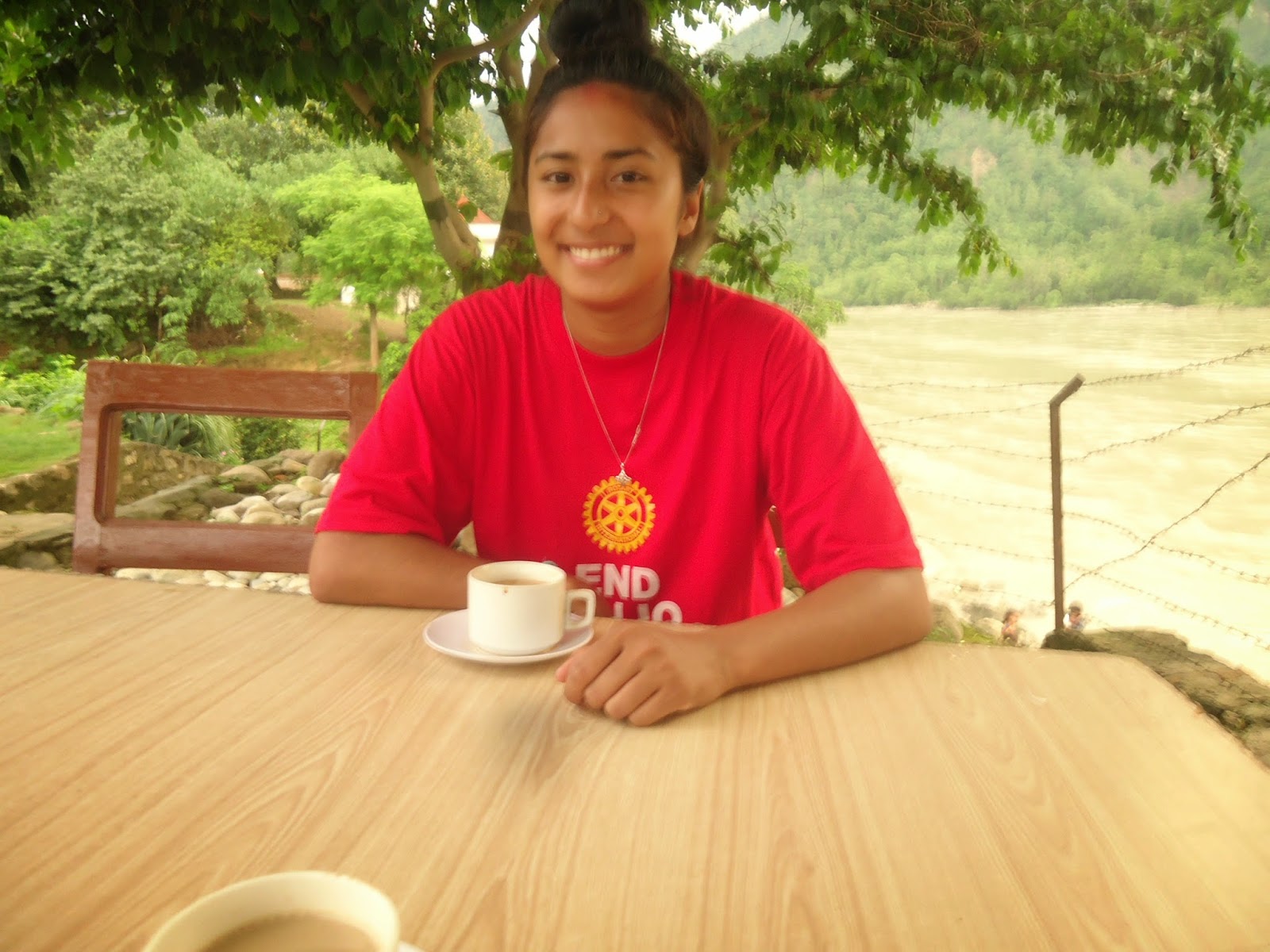
Having tea at the hotel by the river

Fish about to be marinated

Goat meat

Grilling the fish

Rubita and I trying to figure out how to fit the rice into our stomachs

On the way to Dang


I made a 5 day road trip out to western Nepal with Ashok (CDRA Director), Bikram (driver), Anup (Ashok’s son/volunteer), Rupak (volunteer), and Rubita (volunteer). We spent most of the time in the southern plains, called the Tarai region. It’s very flat and extremely hot and humid.  It is also very rural and poor.

Traffic out of Kathmandu
The first day we drove from Banepa to Dang. On the way there, we stopped at one of CDRA’s previous projects. A guy named Lou Capozzola was visiting his daughter in Nepal and saw a newspaper headline about a rope bridge that snapped. A few people drowned in the water below. He decided to fund a project to build a suspension bridge over a river. Before the suspension bridge was in place, people crossed the river by pulling them selves across in flimsy seats on a single cable or rope. There are still many bridges like this. It is hard for farmers to cross with their produce and for children who cross the river every day to go to school. The new bridge makes traffic easier and safer for everyone.


Dedication plaque
The whole bridge.

Bikram, local kids, Rubita, me


Next, we briefly visited an eye hospital. This coming fall, CDRA will host a large eye camp. This is one of the locations where they will set up shop.

Vision test conducted outside

millipede/centipede

hospital

More hospital

Operating theater


mangoes!